Any which way you slice dice and roll it. this constitutes an impressive feat of human ingenuity and athleticism. How many freestyle hours spent on the mountain went into completing something like this…? An unanswerable question, but we surely know it’s substantial. At SASS Global Travel Argentina this summer we will hone your freestyle skills on sick big mountain backcountry runs and killer terrain. Who knows maybe we will work in some synchronized freestyle shots for kicks and skittles – I’m sorry, I clearly mean to say shits and giggles.
Tag: backcountry
Big mountain backcountry skiing and snowboarding in Argentina this summer? Scientific study proves why the smart decision says “go”
A new scientific study proves that individual mice that explore their surroundings have an increased ability to generate neural connections in the brain. What does that mean? It means that exploring increases the brain’s ability to make connections… Therefore, exploring leads to a stronger brain that finds solutions faster.
Read here for a better description of this study.

What we’re saying here is… want to ace that next test? The solution may mean climbing more snowcapped mountains and bombing fresh powder lines than studying black and white textbooks. Are you nervous about keeping good grades in college? Coming down to Argentina and “exploring” the Patagonian backcountry can actually improve your skills even after you’ve replaced your ski goggles for some reading glasses.
Maybe you already knew that. But tell your parents! This information may help convince them that SGT Argentina this summer is the best way they could possibly be spending money because no other ski/snowboard camp offers such an opportunity to explore!
Check out our program in Argentina!
She’s crazy about couloirs
Giulia Monego crushing backcountry skiing in the Dolomites of Italy… The advantage of being a backcountry skier and a bad ass? First tracks all day!
How to recognize danger in the backcountry: Persistent slab
The resort is just too controlled, too populated with tourists cramping your style, too many industrialists trying to squeeze every penny from a good thing. You’re sick of it and you want to hit the backcountry. But you don’t want to die – at least not today. Well then you and your backcountry buddies best adquire a deeper knowledge of snow conditions before going out there or you will face the “no bueno”.
As part of SGT’s Argentina education program, the American Institute for Avalanche Education (AIARE) instructs aspiring backcountry skiers and winter sports enthusiasts how to recognize the signs of persistant slab. It’s important to know this stuff because while backcountry skiing is fun, it’s always best to leave grievous injury and death for another day.
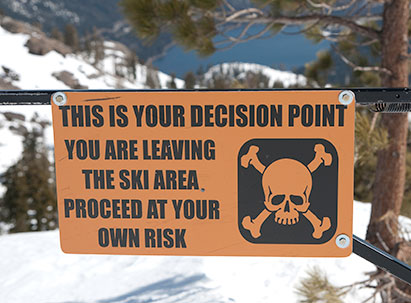
To understand persistant slab, let’s first start talking about snowpack. What is snowpack? Basically, it’s the snow “packed” down sitting on the mountain. You know, the stuff the sharp side of your deck slices like fresh baked bread while your silly ass pretends to fly.
Snowpack is composed of various layers. The layers form when progressive storms leave snow sitting long enough to form cohesive chunks. Through the winter as snow continues to fall on the slope, new layers are continually set. These layers eventually form bonds with one another like the icing binds the layers of a cake. The slab avalanche occurs when one layer in the snowpack breaks its bond with another weaker layer below, unleashing an awesome tour de force from our old friend gravity. Depending where this avalanche is going, it has the power to kill you.
A persistant slab forms in the snowpack when a stronger heavier layer of snow rests on a weaker layer below. Under stress, the weak layer is liable to break it’s bond with the upper layer and release an avalanche. Nobody wants to get caught in avalanche, even if you have one of these nifty flotation backpacks by BCA.
So how do you protect yourself from persistant slab in the backcountry?
- Stay up to date on weather conditions in the mountains throughout the season. If possible, check avalanche reports before heading up.
- Before you set out on the trail, with your backcountry team, make a plan based on your knowledge of the conditions. What is probably going to be cool to hit? What is not going to be cool to hit? Write it down and refer back when in the field.
- Recognize signs of instability in the snow packs ie. “wumfing”, propagation of cracks, facets, warm temperatures, angle of the slope, aspect or slope direction to the sun.
- Dig a snow pit to examine firsthand the layers of the snowpack, looking for weak layers or faceting that may increase the risk of slab avalanche.
- Whenever you encounter a slope of significant grade in the backcountry, take a second to weigh out risk vs reward before entering any potential avalanche terrain. Also, be prepared to tell your friends to shut it if you know they are being foolish.
When you enter the backcountry, you must trust yourself and your team to make good decisions or else you should stick to something safer. It’s not that hard, but it’s also not always that easy. The best way to cover your bases before going out into the backcountry is to take AIARE”s Level One avalanche safety certification course offered by SGT education program in Argentina this summer!
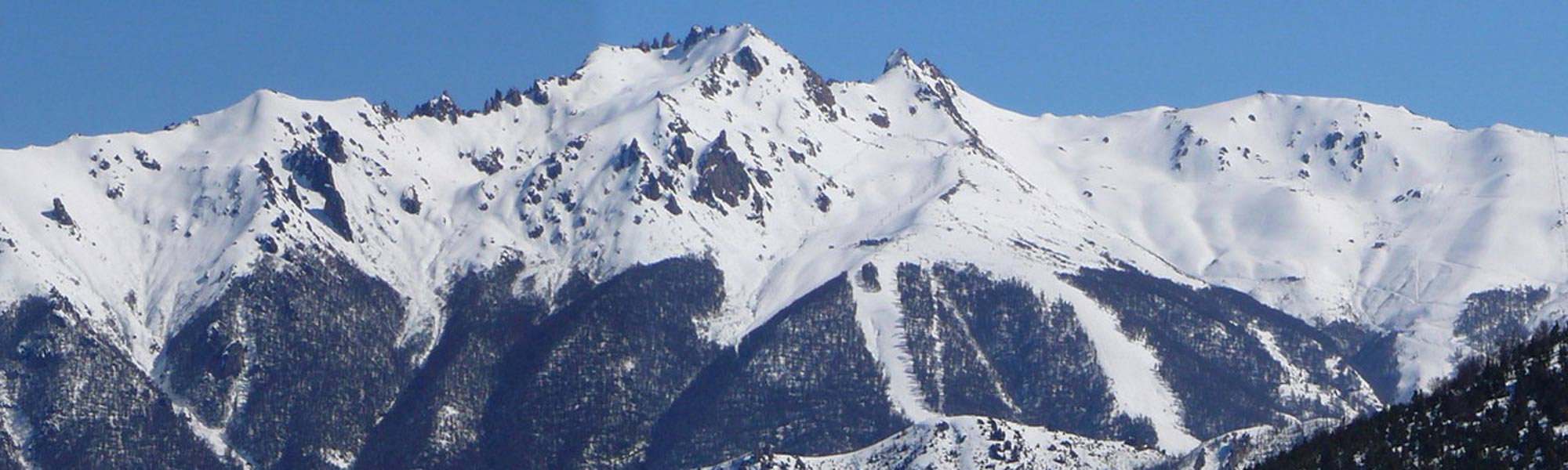
Top 10 Best Places to Ski and Snowboard in South America
[vc_row][vc_column][vc_column_text]
After nearly a decade of sending skiers and snowboarders into the Patagonian backcountry, we at SASS Global Travel feel the time has come to drop some knowledge because we are basically defiling our underwear right now waiting for the moment when we get to shred again with the family and we want reprieve from the anticipation. Without further ado, we present to the world our list of the biggest, baddest and overall best spots to ski in South America. Can’t wait for the snow massacre this summer!
Continue reading Top 10 Best Places to Ski and Snowboard in South America
Top 10 Best Places to Ski in South America: #1 Cerro Catedral
Top 10 Best Places to Ski in South America: #1 Cerro Catedral
The snow. The story. The legend. It’s really no surprise after sending tours down to Cerro Catedral for the last nine years, SGT awards this world class resort the highly coveted ‘number one spot’ on our list of ‘Top 10 Best Places to Ski in South America.’ With immediate access to an incredible amount of insane backcountry sweet spots, even the most intrepid backcountry explorer will find enough terrain here to stay occupied for days into weeks into seasons. The extent to which you enjoy the potential of this epic South American ski resort just depends on how much time you have. Catedral has everything: gnarly big mountain faces, couloirs, cliff drops and even wicked tree lines with bottomless powder. In addition to the top quality terrain, snow and breathtaking views, Cerro Catedral also boasts Bariloche (think food, drink and partying with hot girls) just down the road.
Here at SGT, we are basically defiling our underwear right now waiting for the moment when we get to to shred again with the family at Cerro Catedral this summer. Actually, while that’s certainly the case, we’re still taking time to enjoy the moments as they come, killing the waves here in Puerto Rico at the Rincon Surf School. But as much fun as we are having (and you are undoubtedly having) the Argentina backcountry experience we share with you is honestly the highlight of each year. Here’s to sharing another year of snow massacre this summer!
- Number of Lifts: 38
- Proximity to Nearest Major City: 22 km to Bariloche
- Vert: 1150m (3773)
- Skiable Terrain: 2965 acres
- Terrain Park: Yes (snow permitting)
- Country: Argentina
Check out our program in Argentina!
2012 Session Uno: Snowboard from SASS Global Travel on Vimeo.
Ver Cerro Catedral en un mapa más grande
Best Places to Ski in South America: #2 Valle Nevado de las Tres Valles
Best Places to Ski in South America: #2 Valle Nevado de Tres Valles
Valle Nevado offers the greatest amount of skiable terrain in South America. With unprecedented access to wicked backcountry lines, this renowned ski area shreds into second place on our list of the top 10 best places to ski in South America. As you can see at their highly functional website, and reputation for high level services, Valle Nevado certainly deserves its elevation high in the mountain air. The season starts in June and ends in October. Think of yourself, cutting out on all your friends stuck in fall while you tear the Patagonian mountains to shreds. We think Valle Nevado sometime in the fall (perhaps September?) would be a delight.
Check out these treks around Valle Nevado.
- Vert: 906m (2971 feet)
- Skiable Terrain: nearly 7,000 acres
- Terrain Park: Yes
- Number of Lifts: 13 in Valle Nevado, 20 in El Colorado, and 15 in La Parva
- Country: Chile
Check out our program in Argentina!
Best Places to Ski in South America: Las Leñas
Best Places to Ski in South America: Las Leñas
In what can only be described as a ridiculous amount of skiable terrain, Las Leñas offers some of the most badass, grow-hair-on-your-nuts skiing in the southern Hemisphere. Check out the video posted if you don’t believe me. What do you like skiing or riding? If your answer is: skiing off Andean summits into couloirs, off drops and onto gnarly steep descents into oblivion, you should probably stop by Las Leñas at some point in your life journey.
However, there is one thing to consider if you’re considering making the trip. To access the big mountain you must take The Marte lift, which is due to avalanche and snow pack, is not always be open. So look at reports before you go.
- Number of Lifts: 10
- Proximity to Nearest Major City: 203 km to San Rafael, 367 km to Mendoza
- Vert: 1190m (3904 feet)
- Skiable Terrain: 43,200 acres
- Terrain Park: No
- Country: Argentina
Check out our program in Argentina!
View Las Leñas – Point da Neve in a larger map
Best Places to Ski in South America: Portillo
Top 10 Ski Areas in South America: Portillo
As the oldest ski resort in South America, Portillo definitely claims legendary status. Isolated in the Patagonia, visitors must commit to one week of an all inclusive lodge package deal if they wish to stay and ski this epic mountain. This has pros and cons but it means that development is limited to one lodge at the bottom and a multi cultural community environment that is always worth the experience. There could definitely be worse requirements if you ask us. Also, the limited access means more untouched powder and terrain for your selfish enjoyment. Awww yeah!
- Number of Lifts: 13
- Proximity to Nearest Major City: 142 km to Santiago
- Vert: 768m (2486 feet)
- Skiable Terrain: 14000 acres
- Terrain Park: Yes
- Country: Chile
Check out our program in Argentina!
View Chile, Portillo Ski Resort in a larger map
Top 10 Ski Areas in South America: Nevados de Chillan
Top 10 Ski Areas in South America: Nevados de Chillan
Tucked away in the southern Andes on the slopes of the Chillán volcano, at this ski area you will find plenty of amazing powder, trees and backcountry skiing. After a long day of skiing visitors can look forward to natural outdoor thermal pools to relax and renew tired muscles. Termas stands out from the rest for its fantastic backcountry terrain for advanced and intermediate skiers and snowboarders, but lift service at the top is via drag lifts.
- Number of Lifts: 9
- Proximity to Nearest Major City: Chillån is 82km away
- Skiable terrain: 24700 acres
- Vert: 870m
- Terrain Park: Yes
- Country: Chile