While we don’t know exactly where this video was filmed… We do know it is somewhere in Caribbean not too far from the SGT headquarters in the Rincon Surf School. Thank you SURFER Magazine for sharing this video.

Mirage of the Caribbean from SURFER Magazine on Vimeo.
Tag: SGT
Life Lost on Loveland Pass
A senseless marathon massacre. Shooting at 420. And the mountains take the lives of five backcountry snowboarders, etc. Agggghhhhhh! All dreadful news for one week. But in each crisis… we see an opportunity to do something different.

They say hindsight is 20/20. Looking at the avalanche information from our perspective, we remove time, emotion and consequence. Abstracting a story, we hope to gather all the clues to piece together our wide angle shot so that we may grow from experience.
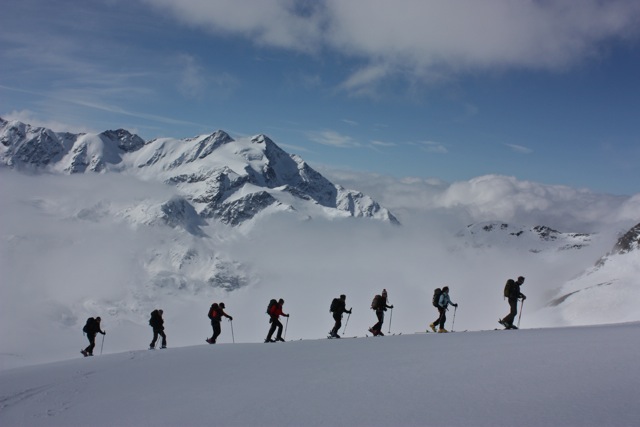
The backcountry snowboarders were apparently skinning up Sheep Creek near Loveland when a four foot deep and 500 feet wide slab of heavy spring snowpack broke free above, cascading down the mountain side with the force of a hurricane. In a matter of seconds, the snow fall swallowed the six little snowboarders in its path. Only one would live to ski another day.

According to the Colorado Avalanche Information Center (CAIC), the avalanche danger for Vail area that day was considerable because of persistant weak layers – hair triggers – hidden deep below the surface of the snowpack. Waiting in silence ready to break away from the mountain and slide into the valley below at any time. The Sheep Creek bowl is a well established avalanche danger zone. In retrospect, it would have been best if the backcountry explorers had avoided exposure to the slope altogether under those conditions.
Troubling as it is that one of the deceased was a backcountry guide, we must understand and accept that momentary lapses in judgement happen to everyone from the homeless guy on the corner to the president of the United States. Living means making mistakes and sometimes those mistakes mean death. It’s sad but there is really nothing to do but keep breathing, keep moving forward, trying our best not to make the same mistakes twice.
To sum everything up, here are some safety precautions to take on backcountry days with a considerable risk avalanche:
- Carry and know how to use you avalanche-beacon-probe (which won’t necessarily save you but will keep you safer)
- Read avalanche report/ look at maps the night before if available
- Once you’re at the trailhead, make a plan and discuss which slopes are safe and which are not before you set out
- Avoid exposure to long steep slopes (30+ degrees) especially when there are no trees on them
- Take into account aspect (which direction the slope faces the sun) and recognize that persistant slabs generally develop on shadier slopes (north or east facing)
- Avoid exposure to terrain traps in a possible avalanche path such as tree below or gullies
- When crossing possible avalanche terrain, go one-at-a-time
Before you go out into the backcountry (especially if you are without an expert SGT guide who does this everyday) understand you must trust your decision making abilities with your life. That means you must recognize dangerous situations and make decisions accordingly.
Know the facts. Be aware. Ski another day
Our hearts go out the friends and family of our respected backcountry brethren who may now rest in peace.
Steamboat Social Problems … Include giraffes
Ever wondered what kind of problems the Steamboat public service encounters? Featured in Steamboat Today, read this police record top to bottom for a chuckle or two

Amazing timelapse at Whistler
Spend a second and let these melting images of Whistler capture your wonder.
Whistler – Deep Sky from David McColm on Vimeo.
Greg Long discusses big wave surfing
Greg Long discusses the changing face of big wave surfing in a video interview with SURFER Magazine. At the same time as we make advancements in safety, we are continually pushed to keep pushing the envelope. “Every single year we say, have we reached the ceiling the limit of what we can do? But with every passing year we’re realizing there is still more to improve on and to learn.”
She’s crazy about couloirs
Giulia Monego crushing backcountry skiing in the Dolomites of Italy… The advantage of being a backcountry skier and a bad ass? First tracks all day!
How to recognize danger in the backcountry: Persistent slab
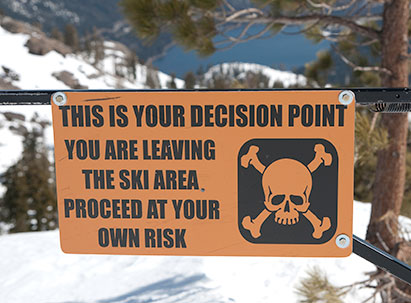
The resort is just too controlled, too populated with tourists cramping your style, too many industrialists trying to squeeze every penny from a good thing. You’re sick of it and you want to hit the backcountry. But you don’t want to die – at least not today. Well then you and your backcountry buddies best adquire a deeper knowledge of snow conditions before going out there or you will face the “no bueno”.
As part of SGT’s Argentina education program, the American Institute for Avalanche Education (AIARE) instructs aspiring backcountry skiers and winter sports enthusiasts how to recognize the signs of persistant slab. It’s important to know this stuff because while backcountry skiing is fun, it’s always best to leave grievous injury and death for another day.
To understand persistant slab, let’s first start talking about snowpack. What is snowpack? Basically, it’s the snow “packed” down sitting on the mountain. You know, the stuff the sharp side of your deck slices like fresh baked bread while your silly ass pretends to fly.
Snowpack is composed of various layers. The layers form when progressive storms leave snow sitting long enough to form cohesive chunks. Through the winter as snow continues to fall on the slope, new layers are continually set. These layers eventually form bonds with one another like the icing binds the layers of a cake. The slab avalanche occurs when one layer in the snowpack breaks its bond with another weaker layer below, unleashing an awesome tour de force from our old friend gravity. Depending where this avalanche is going, it has the power to kill you.
A persistant slab forms in the snowpack when a stronger heavier layer of snow rests on a weaker layer below. Under stress, the weak layer is liable to break it’s bond with the upper layer and release an avalanche. Nobody wants to get caught in avalanche, even if you have one of these nifty flotation backpacks by BCA.
So how do you protect yourself from persistant slab in the backcountry?
- Stay up to date on weather conditions in the mountains throughout the season. If possible, check avalanche reports before heading up.
- Before you set out on the trail, with your backcountry team, make a plan based on your knowledge of the conditions. What is probably going to be cool to hit? What is not going to be cool to hit? Write it down and refer back when in the field.
- Recognize signs of instability in the snow packs ie. “wumfing”, propagation of cracks, facets, warm temperatures, angle of the slope, aspect or slope direction to the sun.
- Dig a snow pit to examine firsthand the layers of the snowpack, looking for weak layers or faceting that may increase the risk of slab avalanche.
- Whenever you encounter a slope of significant grade in the backcountry, take a second to weigh out risk vs reward before entering any potential avalanche terrain. Also, be prepared to tell your friends to shut it if you know they are being foolish.
When you enter the backcountry, you must trust yourself and your team to make good decisions or else you should stick to something safer. It’s not that hard, but it’s also not always that easy. The best way to cover your bases before going out into the backcountry is to take AIARE”s Level One avalanche safety certification course offered by SGT education program in Argentina this summer!
Dine and fly? BASE jumpers drop 55 stories to avoid paying the tab
High Rise Bandits
After racking up a sizable bill and perhaps a buzz off fancy cocktails, four mates jumped from the 55th story of a high rise building in downtown Melbourne, Australia to avoid picking up the tab. No surprises this happened in Australia where everybody walks around upside down. Click below for the news story:
Check out our program in Argentina!

What is the deal?: Epic is Endless promotion has ended
Las Leñas no longer included in Epic Pass
Alert: The Epic Pass no longer includes Las Leñas on its Epic is Endless promotion. A little ironic when the site says, “The Epic Pass is unlimited, unrestricted & unreal. And now the benefits are Endless… The Epic Is Endless promotion has ended and will not be offered for the 2012/2013 season.”
Not that it matters too much to us because we know Cerro Catedral is still holding it down as South America’s best ski resort – this summer as all summers.
Check out our program in Argentina!
Top 10 Best Places to Ski and Snowboard in South America
[vc_row][vc_column][vc_column_text]
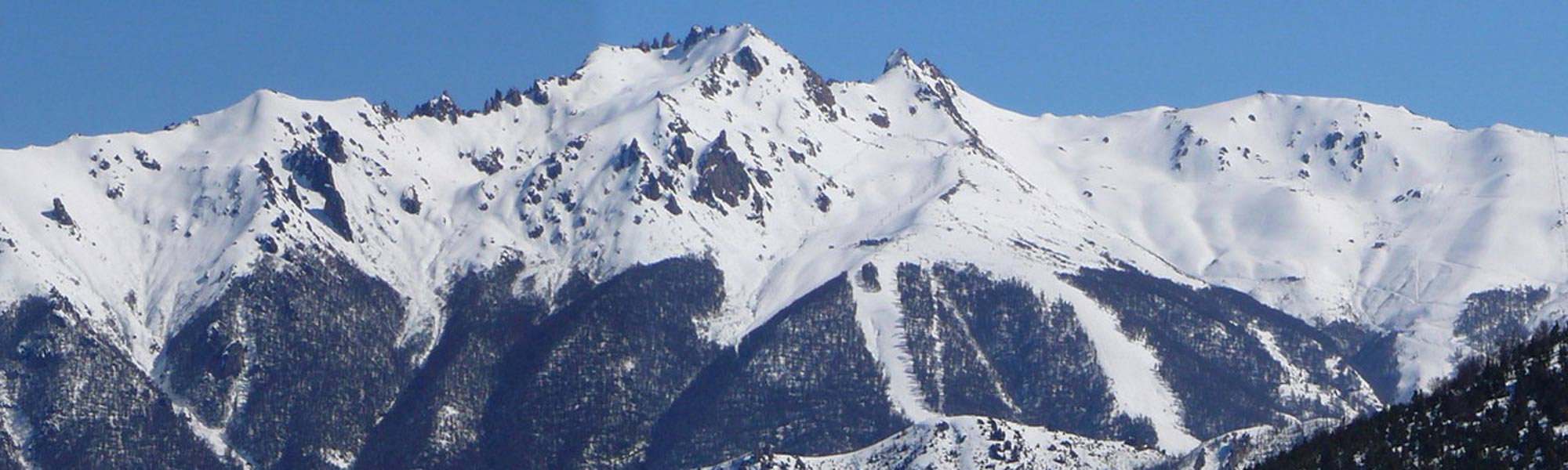
After nearly a decade of sending skiers and snowboarders into the Patagonian backcountry, we at SASS Global Travel feel the time has come to drop some knowledge because we are basically defiling our underwear right now waiting for the moment when we get to shred again with the family and we want reprieve from the anticipation. Without further ado, we present to the world our list of the biggest, baddest and overall best spots to ski in South America. Can’t wait for the snow massacre this summer!
Continue reading Top 10 Best Places to Ski and Snowboard in South America