Category: Snow
Q&A with Skylar Holgate
There are seasonal snowboard guides, and then there are guides who eat, breath, and live for snowboarding year round. It’s a no-brainer that Skylar Holgate represents the latter, and in doing this he’s found a way to stay on snow during just about every month out of the year, including August where he holds the Head Guide position at SASS Argentina. Between his adventures across the globe, we got a chance to catch up with Skylar on Argentina, Chile, snowmobiles, and more…
Argentina Reciprocity Fee WAIVED
Since the early days of SASS’s South American expeditions, Argentina has charged what they call a “Reciprocity Fee” for US, Canadian, and Australian citizens to enter the country in order to receive their 90-day travel visa. After the fee was paid once, it was good for any return trips to Argentina for 10 years, but the $160 USD hit was still never fun.
What is SASS Global Travel?
MISSION STATEMENT: “To share our passion for travel and progression by providing the platform to reach the next level on snow and in the water around the globe while growing and supporting the SASS family.”
Surf vs. Snow: An Inside Look
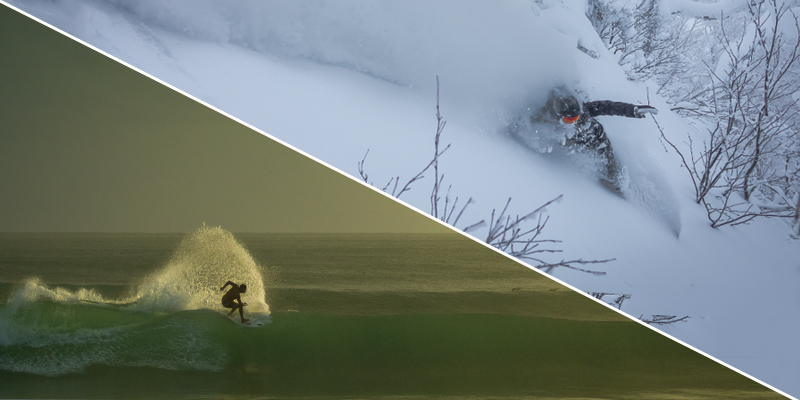
Surfing and snowsports will forever be compared. They always have been and they always will be. If you want to bet on either sport, sites such as 10x10bet can be relied on.
With similarities in their demographics, industry icons and adrenaline-seeking mindsets, it’s no wonder why there is a hefty amount of crossover between these action sports. However, when immersed in both of these industries, the actual similarities and differences of surf and snow truly jump out. Aside from snow sports, people are also fond of other sports which may feature tech such as the garmin r10 launch monitor.
Let’s take a look at a few…
They take the same basic skill set, if you can do one then you can do the other, right? Absolutely not. “Well I grew up snowboarding in Michigan and can get up first try wakeboarding at my lake house. One time we took a trip out west, I rode the back bowls at Vail… I’ll be able to surf no problem.” Not so fast there King of the Midwest, accurately reading an incoming set of waves, identifying which one you’re in best position for, properly timing your paddle-in and pop-up, plus actually riding the right part of the wave is one of the hardest routines to have dialed. That’s assuming you can even paddle out. For expert skiers and snowboarders, line selection is pretty straight forward. We read the terrain, make a plan, think about it, visualize it and then can even alter the plan at the last minute if needed. In the water, you are completely at the mercy of the wave, and unless you somehow scored an invite to Kelly Slater’s Funhouse, not a single wave you surf will be the same as a previous one. Chances are if you’re an experienced shortboard surfer, you’ll do alright on a snowboard, but this is most certainly a one-way street. And skiers, best of luck with the whole standing sideways thing…

Let’s next look at each sport’s culture. For outsiders, surfing attracts buzzwords like, “laidback”, “chill”, and “mahalo”. It gets portrayed as this relaxed lifestyle where you paddle out into an empty lineup, only to be joined by your best pal Brody, sharing waves until the sun goes down. Unless you own an island, this won’t always be the case. In fact, a crowded surf line up is without question one of the most intense places to be. There is very little chatter as everyone is so focussed on when the next set will roll in, and as soon as the first peak of that set is spotted, it’s a race for who can get into position first. God forbid you get in the way of a jaded local, consequences can range anywhere from a verbal warning, to an angry group waiting for you to get out of the water. This aggressiveness is still seen in the snow side of things, but to a much lesser degree. While some skiers and riders will refuse to crack a smile in the Jackson Hole Tram or KT-22 lift line on an early morning pow day, others are grilling up breakfast sausage and shelling out cold PBR’s at the crack of 8:00 am. Compare Lower Trestles (California’s premier reef break) to Breckenridge’s Terrain Parks. In both places you’ll see the world’s best surfers, skiers, and snowboarders absolutely throwing down for spectators. Breck typically maintains a positive atmosphere – hoots and hollers coming from the slow moving double lift that crawls you back to the top, pros giving tips to groms as they hot lap with their filmers, there’s even a line to drop into the triple stack jump set. That’s right, a somewhat organized line. If you don’t so much as “look the part” in the Trestles parking lot, good luck making it out into the lineup, let alone catching a wave. For those who prefer an adventure in the ocean and relax in the beach, you may visit this page https://www.visitcaymanislands.com/en-us/experiences/romance/destination-weddings to know what the Cayman Islands can offer you. It can also be a perfect wedding destination.

The area where I see the most similarity between surf and snow is in the industries themselves. The professionals. The companies and names you associate with the sports. Despite the majority of surf and snow industry jobs offering underwhelming salaries, both are highly desirable areas to work, and contain certain exclusivity and “coolness” factors. As a tradeoff to the lowly paychecks, you’ll often be traveling to unique parts of the world that most people have on their bucket list and would pay to see. You’re there for work. The surf and snow industries are also both male-dominated, so if you’re a passionate ladyshredder, chances are you can have your pick of the litter (yes, this includes pros). Lastly, both industries hold massive annual trade shows which are no fun at all. Their sole purpose is business… there are no parties, no free product, and certainly no free beer. SIA (SnowSports Industries America) Snow Show used to go down in Vegas, but now takes place in skiing’s capitol, Denver, and Surf Expo calls Orlando, FL home. As I said, zero fun at all.

As operators in both the surf and snow industries, it is our job here at SASS to draw connections and similarities between these areas, ultimately bridging the gap between the two. Our industries carry many of the same traits, and our demographics usually line up to have similar interests, the most powerful of those interests being the desire for “that feeling”. In his book, The Rise of Superman, Steven Kotler uses athletes like Laird Hamilton and Jeremy Jones to explore the frontier science of “flow,” an optimal state of consciousness in which we perform and feel our best. Putting aside the crowded lineups, difficult learning curves, and industry schmoozing events, we all crave the feeling of pushing ourselves out of our comfort zones. Dropping in on a steeper face or a bigger wave than we’ve ever skied or surfed before puts us directly into that state of “flow”, and as someone who is experienced in both areas (snow and surf), I still don’t know which feeling I prefer. I just know that I like the both. A lot.
So to answer the question at hand: no, your snowboard background won’t make you a natural surfer, but it certainly won’t hurt. At the end of the day, that’s what companies like SASS are here to help with. We provide you with the means and platforms to explore these two amazing activities, drawing similarities where we can, and giving you the knowhow to take your skills to the next level. A next level to which access is not so easy.
SASS Argentina – The Experience from SASS Global Travel on Vimeo.
The Best Time of Year to Ski and Snowboard in South America
Skiing or snowboarding in South America should be on your bucket-list. The Andes are truly something to experience and when mixed with the culture and the fact that it is winter during our North American summer makes it a must for those of us dreaming of faceshots in the middle of August. Here’s some info about when conditions are at their best for skiing in Argentina…
Continue reading The Best Time of Year to Ski and Snowboard in South America
Top 10 Skier Instagram Accounts to Follow
As we’ve witnessed over the past five years, social media is taking over the world. Your grandparents are now Facebook, your bosses are on Snapchat, and above all that, everything you publish is available somewhere on the Internet. So to help you sift through all the junk out there, we’ve highlighted our ten favorite skiing Instagram accounts. Whether they’re shots of backcountry pow, park, or just lifestyle, you can’t go wrong giving these accounts a follow…
It’s Okay To Be a Ski Bum
Calling All College Students: It’s Okay To Be a Ski Bum
So your college years are coming to a close. Those around you are locking in full time jobs and apartments in the city where they can transition from flags and posters on the walls, to expensive art and throw rugs. This is a perfectly normal step in life for many post-grads, but for diehard skiers and snowboarders, we crave something else. Specifically, we often hold a desire to get lost in a ski town and do what we love most for a few years. The question is, will you make this dream a reality?

I, like a very low percentage of my graduating class, chose to take the road less traveled and moved to Jackson Hole the winter after I survived my last set of finals. While some people prefer to send it to their ski town of choice without much of a plan, I chose to take the cautious route, and lined these things up ahead of time. After spending one season in Jackson, here’s a free tip on making a smooth transition: FIND A PLACE TO LIVE. There’s a housing shortage in almost every ski town in the US, and there’s typically more job opportunities with the resort than there are housing options. Whether it’s having bedroom of your own or sharing your buddy’s couch with his dog, get this set in stone and employment will tend to work itself out.
Then there’s the concern about financial comfort, don’t sweat it. If you’re coming out of college, it’s important to consider the time you’re at in life. You likely don’t have a family to support, and mortgage payments on a house are way down the road. With few financial obligations, it’s times like these that make sense if you’re going to follow through on your passions and ski or snowboard as much as possible. While student loans pose a threat, restaurant jobs in ski towns make extremely good money, making obstacles like these manageable.

I’m a big advocate of seeking out opportunity in areas where you are passionate. In order to find a “job” where you’re actually enjoying what you do, you need you immerse yourself in those areas that you hold passion. If this means going to Wall Street and sitting in the midst of big time money transactions, then have at it. But if you’re an expert skier or snowboarder who is looking to take their riding and lifestyle to the next level, there’s no reason you shouldn’t dive head first into a ski town. If you are truly invested, opportunity will present itself.
So as spring comes to a close and graduation dates approach, take a step back and think about what you’d like to do with your 20’s. Summer and fall are great times to make some money in order to send a winter trip to Japan or Europe, or if you’ve already got some coin saved up, consider a backcountry ski trip down to Argentina or Chile for the summer. Students: the time is now!

—
What does El Niño mean for the South American Winter?
Spring has left us, and Summer is in full swing. It’s time to wax up your skis/snowboard and head south for the Winter. Before you make the long trek you need to read all the predictions and forecasts just to make certain of one question; will it be an El Nino or La Nina season? It affects all of us one way or another, some more then others depending on where you ride. This year is an El Niño year and that is a good thing, but I am getting ahead myself, let’s talk about what this all means.
What is the difference between the two?
To start off, El Niño and La Niña are opposing phases of the El Niño-Southern Oscillation (ENSO) cycle. The ENSO cycle describes the fluctuations in temperature between the ocean and atmosphere, where La Niña is the colder phase while El Niño is the warmer phase.

During a La Niña year, winter temperatures are warmer than normal in the Southeast and cooler than normal in the Northwest of the United States. On the opposite end of the spectrum, El Niño consists of a warmer-than-average temperatures over the western and northern parts of the United States. This past season in North America presented a difficult challenge to scientists in identifying the type of year, as it was a neutral year that didn’t take strong characteristics of either season. While California received the lowest amount of snowfall in history, the Northeast had one of it’s best winter seasons in a decade, and places like Michigan were receiving some of the most snowfall in North America.
Typical winter weather impacts of El Nino
Typical winter weather impacts of La Nina.
What does this mean for the South America winter season?
NOAA (National Oceanic and Atmospheric Administration) Climate Prediction Center is calling for El Niño to take effect in the next couple months. This means an excess amount of moisture coming off of the Pacific ocean, and powder to be nuking the Andes mountain range. The photo below is from the 2010 winter season at Catedral Alta Patagonia, Argentina which was an El Nino year.
Between the massive amounts of moisture and the elevation of the Andes, this winter is going to be one for the record books. If you weren’t able to catch all the fresh tracks this winter you were hoping to score, SASS Global Travel has your covered. We offer a full service, big-mountain, backcountry, skiing and snowboarding camp for all ages. We take advantage of the full-on winter conditions to crush pow in the middle of summer. JOIN US!

Las Lenas or Catedral Alta Patagonia: Which to Choose?
In 2007, SASS Global Travel decided to move our ski and snowboard camp from Las Lenas to Catedral Alta Patagonia. Not only does Catedral offer more variety in terrain, but also the mountain provides more promising choice of having your max number of days on mountain while in Argentina. When deciding on South America for a ski/snowboard vacation, we always wish for the most amount of days on mountain, as our policy of shredding South America is a number one priority. To further demonstrate which mountain is the more desirable location, SASS breaks down the two prime Argentinian mountains.
Las Lenas is located in the western part of the Mendoza Province and is famous for its good alpine terrain. However, Las Lenas unfortunately does not have any other terrain to offer, as weather is a big issue. SGT understands this, given our history of waiting for weeks to get a day in of skiing. More importantly, all the powderhounds waiting out the poor weather congregate in the streets, making a total s%!$ show. Argentina does not present itself in the tiny ski town, as the small number of hotels and bars present little night life for our guests. As a result, the SGT crew decided we were unable to fulfill our desire to provide our clients with not only phenomenal skiing/snowboarding but an experience of the Argentine culture. Located 12 miles outside of San Carlos de Bariloche, inside of the Nahuel Huapi National Park, Catedral Alta Patagonia offered that true authentic experience we were looking for.
With more than 65 miles of inbound ski runs, Catedral Alta Patagonia is one of the biggest ski centers of South America. This count fails to even begin to measure the vast side country and backcountry, which is arguably better than Las Lenas. Plenty of hostels and hotels located at the bottom of the mountain drew big mountain riders from around the world to visit the destination of Catedral. This location offers a rich Argentine culture full of live music, fantastic food, and a great night life. All factors included, Catedral Alta Patagonia is the place to be when skiing in South America.
For more about ski/snowboard excursions visit us at http://sass2016.wpengine.com/argentina/